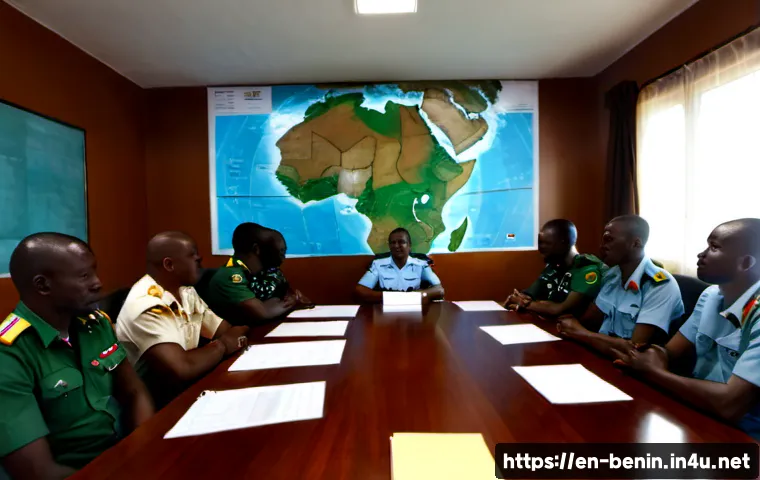
Benin’s defense policy is best understood as a security-focused strategy built around territorial protection, northern border pressure, and maritime safety in the Gulf of Guinea.

Its effective military capability depends less on headline asset claims and more on deployable personnel, mobility, surveillance, maintenance, and regional cooperation.
For researchers and operational planners, the key task is separating public policy statements from verified readiness. This matters for NGOs, logistics teams, maritime operators, and investors with exposure to changing local conditions.
Public reporting may be enough for a broad overview, while specialist country-risk or maritime-risk intelligence can help where decisions depend on current, location-specific information.
At a Glance
- Primary priorities: territorial security, northern border protection, internal stability, and Gulf of Guinea maritime safety.
- Main constraint: stated policy does not automatically show deployable forces, equipment readiness, or operational reach.
- Best assessment method: review mission needs, verified evidence, sustainment capacity, and regional security partnerships together.
| Mission Area | Likely Capability Need | Evidence to Verify | Commercial Research Option |
|---|---|---|---|
| Land-border security | Mobility, communications, local awareness, and sustained patrol capacity | Credible reporting on operations, access routes, training, and logistical support | Country-risk monitoring with northern-area coverage |
| Counterterrorism pressure | Intelligence coordination, rapid response, and interagency cooperation | Current threat reporting, incident patterns, and verified operational activity | Specialist security-intelligence analysis |
| Maritime security | Coastal surveillance, patrol coordination, and incident reporting | Port conditions, maritime alerts, reporting procedures, and regional coordination | Maritime-risk monitoring service |
What Benin’s Defense Strategy Is Designed to Protect
Territorial Integrity, Internal Stability, and Civilian Control
Benin’s defense policy can be assessed first through its core protective purpose: preserving territorial integrity, supporting internal stability, and maintaining security institutions under civilian authority. These goals are broader than battlefield capability. They also involve the ability to move personnel, communicate across agencies, protect key routes, and respond proportionately when security conditions change.
For an analyst, the important distinction is between a policy objective and an operational outcome. A public commitment to strengthen security may signal political priority, but it does not by itself confirm force readiness, available equipment, or the ability to sustain a response over time. Assessment should therefore focus on verifiable indicators rather than general statements.
Why Northern Border Security Has Become a Central Concern
Northern border security is a central lens for understanding Benin’s defense needs. Border areas can require persistent presence, local knowledge, reliable communications, transport access, and coordination with civilian authorities. A force may have a formal mandate for border protection while still facing practical limits in mobility, maintenance, resupply, or situational awareness.
Counterterrorism pressure should not be evaluated only through visible deployments or public announcements. Researchers should examine whether reporting identifies sustained patrol patterns, coordinated security activity, credible local incident information, and support arrangements that can keep personnel operational. Details of deployments, intelligence capabilities, and classified plans should be treated as unknown unless independently verified.
Maritime Protection in the Gulf of Guinea
Benin’s coastal setting makes Gulf of Guinea maritime security an important part of the broader defense picture. Maritime protection can include coastal awareness, port-related security, patrol coordination, and responses to safety or security incidents affecting commercial activity. The relevant question is not simply whether naval or coast-guard functions exist, but how well those functions match the risks facing specific waters, ports, routes, or operators.
Shipping companies and maritime service providers should avoid treating national-level descriptions as route-specific assurance. Conditions can differ by operating area and time period. A maritime-risk monitoring provider may add value when a voyage, port call, cargo movement, or crew decision depends on updated reporting rather than a general country profile.
Military Capability at a Glance: Missions, Assets, and Constraints
Land Forces and Border-Response Requirements
Land forces are most relevant when the mission requires presence across dispersed areas, border observation, convoy support, or rapid response to a developing incident. The practical capability test is whether units can reach, communicate, operate, and remain supplied in the locations that matter. Personnel totals alone do not answer that question.
Current active-duty numbers, readiness levels, unit locations, and equipment availability require verification. A useful assessment should separate confirmed facts from assumptions and identify the date of every important claim. This is especially important when comparing Benin with neighboring West African states, where mission environments and reporting quality may differ substantially.
Air Mobility, Surveillance, and Logistical Limitations
Air mobility and surveillance can support border response and wider security coordination, but public references to aircraft or surveillance plans should be read carefully. The operational value of any platform depends on crew training, serviceability, maintenance, fuel access, communications, basing arrangements, and mission planning. A listed asset is not automatically an available asset.
For security researchers, logistical sustainment is often more informative than equipment headlines. Consider whether a capability appears connected to trained operators, repair arrangements, spare parts, secure communications, and a clear operational mission. Where those elements are not confirmed, the correct conclusion is uncertainty rather than a readiness claim.
Naval and Coast-Guard Roles in Coastal Security
Coastal-security roles may involve patrol presence, maritime-domain awareness, reporting channels, and coordination with other national or regional actors. For commercial users, a meaningful assessment should connect these roles to an actual operating decision: selecting a port procedure, reviewing a transit plan, or updating a vessel security posture.
It is sensible to compare a provider’s maritime alerts, methodology, regional coverage, and update frequency before paying for monitoring. General security news can be useful, but it may not provide the operational detail needed by a maritime operator with a time-sensitive exposure.
Comparing Security Priorities: Counterterrorism, Border Control, and Maritime Safety
Mission Comparison Table: Threat, Response Need, and Verification Points
| Priority | Response Need | Verification Point |
|---|---|---|
| Counterterrorism | Timely intelligence, coordination, mobility, and sustained field support | Whether public reporting distinguishes policy intent from confirmed operational capacity |
| Border control | Patrol endurance, transport, communications, and local-area awareness | Whether conditions allow continuing coverage rather than isolated activity |
| Maritime safety | Surveillance, reporting, patrol coordination, and port-related awareness | Whether the information is current and relevant to a defined maritime operation |
How Regional Cooperation Can Extend Limited National Capacity
Regional cooperation can extend national capacity through shared awareness, coordination, training opportunities, and cross-border communication. It should be seen as a potential force multiplier, not an automatic substitute for national readiness. The operational impact of future security agreements or external assistance remains something to verify.
A layered review is more reliable: assess Benin’s stated policy, then examine regional relationships, and finally consider the local conditions affecting a specific project or route. This approach helps avoid broad conclusions based on a single announcement or a single incident.
What Capability Claims Should Be Treated Cautiously
Claims about force size, new equipment, procurement, intelligence reach, or deployment activity should be handled with care when the underlying evidence is incomplete. Announced, delivered, operational, and sustainably deployable are different categories. Conflating them is one of the most common errors in defense-sector analysis.

Defense Planning, Procurement, and Operational Risk Factors
Training, Maintenance, Communications, and Sustainment Considerations
Defense planning is not only about acquiring assets. Training, maintenance, communications, repair capacity, supply arrangements, and command coordination determine whether an asset contributes to a real mission. For this reason, a capability assessment should ask what supports the platform or unit after it appears in a public announcement.
These checks are particularly useful where verified defense spending, procurement contract values, and readiness data are unavailable. Rather than estimating unconfirmed figures, analysts can identify the evidence still needed and explain how the missing information affects confidence.
How to Assess Procurement Announcements Without Assuming Delivery or Readiness
When reviewing a procurement announcement, begin with the intended mission. Then look for evidence of delivery, operator training, maintenance support, integration with communications systems, and actual deployment. The absence of public detail does not prove failure; it simply means the claim should not be treated as confirmed capability.
For defense-sector research services, transparency matters. A useful provider should explain its source standards, publication dates, regional expertise, and limits on what it can verify. This is more valuable than a database that presents uncertain information with false precision.
Common Mistakes When Comparing West African Defense Forces
Common mistakes include ranking forces only by reported equipment numbers, comparing countries without considering mission geography, and assuming that external support produces immediate operational results. Another error is ignoring the difference between national security priorities and the needs of a particular NGO, investor, logistics corridor, or maritime operation.
Who Needs a Deeper Benin Security Assessment?
NGOs, Logistics Firms, Maritime Operators, and Investors
A deeper assessment may be useful for organizations with personnel, cargo, facilities, or schedules exposed to changing conditions. NGOs may need location-specific context for field planning. Logistics firms may need route and border-risk visibility. Maritime operators may need timely coastal and port-related awareness. Investors may need to understand whether a security concern could affect continuity, access, or project timelines.
When Public Reporting Is Enough and When Specialist Risk Analysis Adds Value
Public reporting is often sufficient for academic background research or a high-level country overview. Specialist country-risk analysis becomes more relevant when a decision has a narrow location, a fixed operating date, a material financial exposure, or a duty-of-care implication. The value is not certainty; it is a more structured view of current evidence, gaps, and plausible operational questions.
Questions to Ask Before Selecting a Regional Security-Information Provider
Ask whether the provider covers Benin directly or relies mainly on broad regional summaries. Check how frequently alerts are updated, whether the methodology is explained, and whether reports distinguish verified information from analyst judgment. Also ask whether the service covers land-border, political-security, and maritime-risk questions relevant to your operation.
Selection Criteria and Comparison Summary
Prioritize mission relevance over headline equipment numbers. Compare data recency, local coverage, analytical method, regional expertise, and pricing transparency before choosing a security-intelligence provider. Confirm whether the service can address the specific environment you need to assess: northern operations, logistics routes, coastal activity, or a wider country-risk profile. Use a layered view that combines national policy, regional partnerships, and local operating conditions. Compare coverage, update frequency, methodology, and regional expertise before choosing a security-intelligence provider. Official service descriptions and detailed terms should be checked on the relevant provider page.
In Closing
Benin’s defense policy is shaped by overlapping land-border, internal-security, and maritime priorities. A credible capability assessment should focus on what can be verified about mission support, readiness, and operational sustainability. Unknown personnel figures, spending data, deployments, and classified capacities should remain clearly labeled as unverified. For operational decisions, current local context matters more than broad military rankings.
Useful Information to Keep in Mind
1. Treat policy statements as indicators of priority, not proof of field capability.
2. Check the publication date of security reporting before relying on it.
3. Separate procurement announcements from delivery and operational readiness.
4. Match the intelligence product to the decision: country overview, route review, or maritime monitoring.
Important Limitations
Publicly available information may not confirm active-duty personnel levels, unit deployments, readiness, defense expenditure, contract values, intelligence capacity, or equipment availability. Future regional agreements and outside assistance may also have uncertain operational effects. Any high-stakes assessment should identify these gaps rather than fill them with assumptions.
Frequently Asked Questions
Q1. What are Benin’s main military and security priorities?
A1. The central priorities are territorial security, internal stability, northern border protection, and maritime safety in the Gulf of Guinea. The practical balance among these priorities depends on current conditions and verified operational requirements.
Q2. How strong is Benin’s military compared with neighboring West African states?
A2. A simple ranking would be unreliable without current, verified information on personnel, readiness, deployments, sustainment, and mission conditions. A better comparison examines whether each force can support the specific land-border, counterterrorism, or maritime mission being considered.
Q3. When should a business or NGO pay for country-risk or maritime-security intelligence on Benin?
A3. Paid analysis may be worth considering when an organization has a time-sensitive operation, location-specific exposure, significant personnel or cargo risk, or a need for updated monitoring. For general background research, public reporting may be sufficient when its date, source quality, and limitations are clear.