Benin’s political landscape has been marked by a series of coups that have shaped its journey toward stability and democracy. These dramatic shifts in power reflect not only the internal struggles within the country but also the broader challenges faced by many post-colonial African nations.
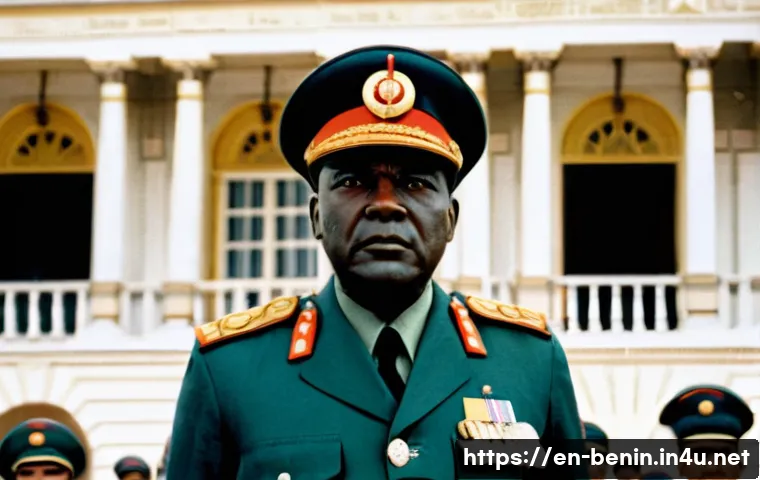
Understanding the causes and consequences of these coups offers valuable insight into Benin’s evolving governance and social dynamics. The ripple effects of these events continue to influence the nation’s political and economic environment today.
Let’s dive deeper into the history and significance of Benin’s coups to get a clearer picture of how they’ve shaped the country’s path forward. We’ll explore the key moments and their lasting impact, so stick with me as we uncover the story in detail!
Origins and Early Political Turmoil in Benin
Post-Independence Challenges and Power Struggles
In the immediate aftermath of Benin’s independence from France in 1960, the country faced a turbulent political climate. The vacuum left by colonial rule was quickly filled by competing factions eager to define the nation’s future.
This period was marked by a lack of strong institutional frameworks, which made the government vulnerable to internal dissent and power grabs. Leaders often found themselves challenged by military officers and rival political groups, resulting in a series of unstable governments.
The fragility of these early administrations was a clear sign that Benin, like many African countries newly freed from colonialism, was still searching for a stable path forward.
The Role of Military Influence in Early Coups
Military officers in Benin quickly became key players in the country’s political scene. The lack of a robust civilian political culture meant that the army was often seen as a force capable of restoring order or asserting control.
However, this often backfired, as military interventions usually led to further instability rather than lasting peace. The military’s involvement blurred the lines between governance and force, undermining democratic norms and creating an environment where coups became a recurring theme.
This reliance on the military set a precedent that complicated Benin’s journey toward civilian rule and democracy.
Impact on Benin’s Social and Economic Landscape
The constant political upheaval had deep repercussions beyond just government leadership. Socially, the frequent changes in power created uncertainty and anxiety among citizens, many of whom struggled with poverty and underdevelopment.
Economically, the coups disrupted policies and deterred foreign investment, making it difficult for Benin to achieve sustained growth. Public services suffered as resources were diverted to political and military interests rather than social welfare.
This cycle of instability reinforced a sense of mistrust between the government and the people, further complicating efforts to build a cohesive national identity.
Key Coups That Redefined Benin’s Political Trajectory
The 1963 Coup and Its Immediate Aftermath
The coup of 1963 was one of the earliest and most impactful in Benin’s history. It marked the first time the military explicitly seized control, overthrowing the civilian government in power.
This event shocked the nation and set off a chain reaction of political reconfigurations. The leaders who emerged from this coup tried to consolidate power quickly, but their hold was tenuous.
The military’s involvement in governance created a precedent that made future coups more likely, as factions within and outside the army vied for influence.
The 1963 coup is often seen as a turning point that exposed the fragility of the young republic’s democratic institutions.
The1972 Coup Led by Mathieu Kérékou
Mathieu Kérékou’s 1972 coup was arguably the most significant in Benin’s modern history. It brought an end to the cycle of short-lived governments and introduced a Marxist-Leninist regime that lasted over a decade.
Kérékou’s military background helped him consolidate power effectively, but his rule was marked by authoritarianism and ideological rigidity. While this period brought some stability, it also suppressed political freedoms and led to economic difficulties due to the centralized control of the state.
Kérékou’s regime left a mixed legacy—on one hand, it ended the frequent coups, but on the other, it introduced a different kind of political repression.
The 1990 National Conference and Transition to Democracy
The early 1990s marked a dramatic shift as Benin moved away from military rule towards democracy. The National Conference of 1990 was a landmark event where political leaders, civil society, and other stakeholders gathered to chart a new course.
This peaceful transition was unique in the region and demonstrated the country’s desire to break from its coup-ridden past. The conference led to the drafting of a new constitution and the establishment of multiparty elections.
This period also saw the military relinquishing direct political control, allowing civilian rule to flourish. It was a hopeful moment that redefined Benin’s political landscape for the better.
Factors Driving Repeated Coups in Benin
Weak Political Institutions and Governance Issues
One of the main reasons Benin experienced repeated coups was the weakness of its political institutions. From the outset, governmental structures lacked the resilience needed to manage internal conflicts and competing interests effectively.
This institutional fragility meant that when crises arose, there was little to prevent military or factional takeovers. Poor governance, corruption, and lack of transparency further eroded public trust, leaving the door open for power grabs.
These weaknesses created a cycle where coups became the default mechanism for change, rather than democratic processes.
Ethnic and Regional Divisions
Benin’s diverse ethnic and regional landscape also played a role in its political instability. Competition among different groups often influenced political alliances and rivalries.
Some coups were driven by factions seeking to protect their ethnic or regional interests, exacerbating tensions. This dynamic made national unity harder to achieve and complicated efforts to build inclusive political systems.
Managing these divisions required careful negotiation and compromise, something that was often lacking during periods of crisis, leading to repeated disruptions.
External Influences and Cold War Dynamics
The geopolitical environment during the Cold War also affected Benin’s coups. Both Western and Eastern bloc countries sought to extend their influence in Africa, sometimes supporting different factions within Benin.
This external meddling complicated internal politics and occasionally provided resources or legitimacy to coup leaders. The ideological battles of the time meant that Benin’s political struggles were not isolated but part of a larger global contest.
This external dimension added layers of complexity to the country’s internal conflicts and delayed the consolidation of stable governance.
Long-Term Effects of Coups on Benin’s Society

Challenges to Democratic Consolidation
The legacy of coups in Benin has made democratic consolidation a slow and challenging process. The repeated disruptions weakened the development of political parties and institutions that could function independently of military influence.
Even after the successful transition in the 1990s, echoes of past instability sometimes resurface in political tensions and public skepticism. Citizens who lived through years of upheaval often remain cautious about the durability of democratic gains.
Building trust in democratic processes remains an ongoing task that requires addressing the historical wounds caused by military interventions.
Economic Consequences and Developmental Delays
Economically, the coups had a clear negative impact. Each change in regime often meant a shift in policies and priorities, which undermined long-term planning and foreign investment.
Infrastructure projects stalled, and social programs suffered from inconsistent funding. The uncertainty created by political instability also affected everyday life, as businesses hesitated to expand and people faced job insecurity.
While Benin has made strides in recent years, the economic scars from decades of coups are still visible in the country’s development indicators.
Strengthening Civil Society and Political Engagement
Interestingly, the history of coups also spurred the growth of civil society in Benin. Citizens, tired of military rule and political chaos, began organizing to demand accountability and greater participation.
The National Conference and subsequent democratic reforms were fueled by these grassroots movements. Over time, civil society organizations have played a crucial role in promoting human rights, transparency, and political education.
This increased political engagement has been vital in helping Benin maintain its democratic path and resist the return of military dominance.
Comparative Overview of Major Coups in Benin’s History
| Year | Key Players | Outcome | Political Impact | Economic Consequences |
|---|---|---|---|---|
| 1963 | Military officers led by Christophe Soglo | Overthrow of civilian government | Started military dominance in politics | Disrupted governance and policy continuity |
| 1972 | Mathieu Kérékou and military faction | Establishment of Marxist-Leninist regime | Ended frequent coups, centralized power | Economic decline due to state control |
| 1990 | National Conference including civil society | Transition to multiparty democracy | Military relinquished power, democratic reforms | Improved investor confidence, gradual growth |
Modern Reflections on Benin’s Political Evolution
Lessons Learned from Past Instability
Looking back, Benin’s history of coups offers important lessons about the dangers of weak institutions and the military’s role in politics. It shows how fragile democracies can be when power is concentrated in the hands of a few or when governance structures lack accountability.
For Benin, these experiences have reinforced the need for strong, transparent institutions and inclusive political participation. There is a growing awareness among leaders and citizens alike that stability and development depend on respecting democratic norms and resolving conflicts peacefully.
The Role of Youth and Technology in Shaping Politics
Today, Benin’s younger generations are playing a crucial role in shaping the country’s political future. With greater access to education and technology, they are more engaged and informed than previous generations.
Social media platforms have become powerful tools for political mobilization and awareness, helping to hold leaders accountable. This dynamic injects fresh energy into Benin’s democracy and serves as a counterbalance to old patterns of instability.
The youth’s active involvement is a hopeful sign for continued progress.
Remaining Challenges and Opportunities Ahead
Despite the progress, Benin still faces challenges rooted in its past coups. Ensuring that the military remains subordinate to civilian authority is an ongoing concern.
Additionally, addressing economic inequalities and regional disparities is essential to prevent new conflicts. However, Benin’s experience also presents opportunities.
The country’s relatively peaceful democratic transitions and growing civil society demonstrate resilience. With continued reforms and inclusive governance, Benin can build on its hard-won stability and pursue a more prosperous future free from the shadows of coups.
글을 마치며
Benin’s journey through political upheaval and military coups has shaped its modern identity in profound ways. Despite early instability, the country’s commitment to democratic reforms and active civil society has paved the way for greater political stability. Learning from its turbulent past, Benin continues to build stronger institutions and foster inclusive governance. The involvement of youth and technology offers new hope for a more resilient and prosperous future.
알아두면 쓸모 있는 정보
1. Benin’s first military coup in 1963 set a precedent for military influence in politics that lasted for decades.
2. The 1972 coup led by Mathieu Kérékou introduced a Marxist-Leninist regime, which centralized power but limited political freedoms.
3. The 1990 National Conference was a groundbreaking event that peacefully transitioned Benin to multiparty democracy.
4. Ethnic and regional divisions have historically complicated political unity, making inclusive governance essential.
5. Today’s younger generation, empowered by technology, plays a key role in maintaining democratic accountability and political engagement.
중요 사항 정리
Benin’s political history highlights the critical importance of strong, transparent institutions in preventing military interference and sustaining democracy. Repeated coups were largely driven by weak governance, ethnic tensions, and external influences, which disrupted social and economic development. However, peaceful democratic transitions and growing civil society activism demonstrate Benin’s resilience. Continued focus on inclusive political participation, civilian control over the military, and addressing economic disparities remains vital to securing long-term stability and growth.
Frequently Asked Questions (FAQ) 📖
Q: What were the main causes behind the series of coups in Benin’s political history?
A: The coups in Benin were largely driven by a mix of internal political instability, economic hardships, and struggles for power among military and civilian leaders.
After gaining independence, the country faced challenges such as weak institutions, corruption, and ethnic divisions, which created fertile ground for military takeovers.
Many coups were attempts to address perceived government failures or to reset the political direction, though they often led to further instability before eventually paving the way for democratic reforms.
Q: How have these coups impacted Benin’s path toward democracy and stability?
A: While coups initially disrupted governance and created uncertainty, they also acted as turning points that forced political restructuring. For example, the 1972 coup led to a Marxist-Leninist regime, but by the early 1990s, mounting internal and external pressures following years of authoritarian rule pushed Benin toward a democratic transition.
This shift was marked by peaceful elections and a new constitution, making Benin one of Africa’s more stable democracies today. The legacy of these coups is complex—they caused short-term turmoil but also set the stage for longer-term political maturity.
Q: What are the lasting effects of Benin’s coups on its current political and economic environment?
A: The echoes of past coups still resonate in Benin’s political culture, influencing how citizens view authority and governance. On one hand, there is a strong desire for stability and democratic participation, reflecting lessons learned from years of upheaval.
Economically, periods of instability hindered growth and investment, but recent decades of relative peace have allowed for gradual development and increased foreign partnerships.
However, challenges like corruption and weak institutions remain, reminding us that the journey toward consolidated democracy and prosperity is ongoing.